

MK350N PREMIUM Spectroradiometer
The blue light hazard B(λ) and some other photobiological risks have been included in the latest edition of the luminaire standard IEC 60598-1, as well as in other horizontal product safety standards, which were subsequently adopted as mandatory standards in many countries. Luminaires shall be marked if they use light sources that exceed the limit of the unlimited RG1 group. Portable luminaires for children and plug-in night lights shall not exceed RG1.
It covers the wavelength range of 300–700 nm and can measure retinal eye injury. The evaluation and classification methods for B(λ) are described in detail in IEC 62471 and IEC/TR 62778. The blue-light–weighted radiance LB and the blue light hazard efficacy KB are adopted as the main indices for B(λ).
Traditionally, the photobiological safety of lighting products is evaluated in a dark room using a complex and costly measurement system, such as the OST 500/300 optical radiation test system, which is generally used in professional laboratories.
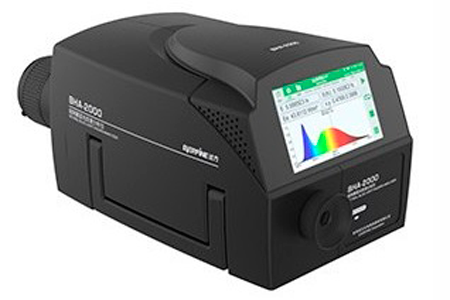
To perform high-efficiency, low-cost, yet accurate measurements of LB and KB, the BHA-2000 Retinal Blue Light Hazard Analyzer has been specially developed. It adopts the radiance measurement geometry according to IEC 62471 and IEC/TR 62778. The software can analyze KB,v and determine the maximum LB within a requested field angle of lighting products to accurately assess B(λ).
The BHA-2000 has a compact size and is equipped with a touchscreen for operation and readings, making it very convenient for fast and accurate measurements. It can be applied not only for quality checks and R&D laboratories but also for field measurements.